There are no items in your cart
Add More
Add More
| Item Details | Price | ||
|---|---|---|---|

Created by - Vishnu Dutt
English and Hindi


Because most network engineer interviews are not won on memory. They are won on clarity. The interviewer hands you a marker, points at a whiteboard, and asks something that sounds simple.
*Explain how two computers talk on the same network. Draw a small office. Tell me what happens when I type a URL.
* The candidates who freeze are usually the ones who memorized configurations without ever asking why those configurations exist. The candidates who get the offer are the ones who can pick up the marker, draw a small picture, and walk the interviewer through the why.
Fifteen topics. Thirteen hours. Each topic begins with the problem that pushed engineers to invent the protocol or the design. Only then does the explanation move to how the protocol works and what you should say in an interview.
who spent 19 plus years at Cisco Systems and has trained 15000 plus learners across 100 plus countries. The teaching style is whiteboard first. You see a problem drawn out. You see why a layer 2 network alone is not enough. You see why MAC and IP both need to exist. You see why TCP carries sequence numbers. By the time the topic ends, you are not memorizing an answer. You are reconstructing it from first principles, which is exactly what a strong interviewer wants to see.
the topic that opens almost every networking interview. From there the series moves to layer 2 communication, layer 3 communication, spanning tree, OSI versus TCP/IP, and the reason MAC addresses still exist when we have IP. The middle of the series picks up traceroute, TCP sequence and acknowledgement numbers, MTU and MSS, DNS, and the famous *what happens when you type Google.com* question. The final stretch covers how to connect a network to the internet, OSPF link state behavior, a small office design exercise, and a structured way to troubleshoot any network problem.
Where a topic gains from being seen in motion, you watch the protocol behave on real virtual routers and switches. Spanning tree blocking a port. OSPF building a topology. Traceroute walking from hop to hop. Watching is different from reading, and remembering is easier when you have watched.
It is built absolutely from scratch. If you have not done CCNA yet, you will still follow along because every concept opens with why. If you have done CCNA, you will find that this series fills the gaps that the syllabus alone never closes — the gaps that show up in the interview room.
Why does every interviewer start here? Because IP addressing tells the interviewer in two minutes whether you understand networks at all. You will learn classes, subnetting, host and network bits, and how to slice an address space cleanly. The why first approach makes subnetting feel like dividing a street into houses rather than memorizing a table.
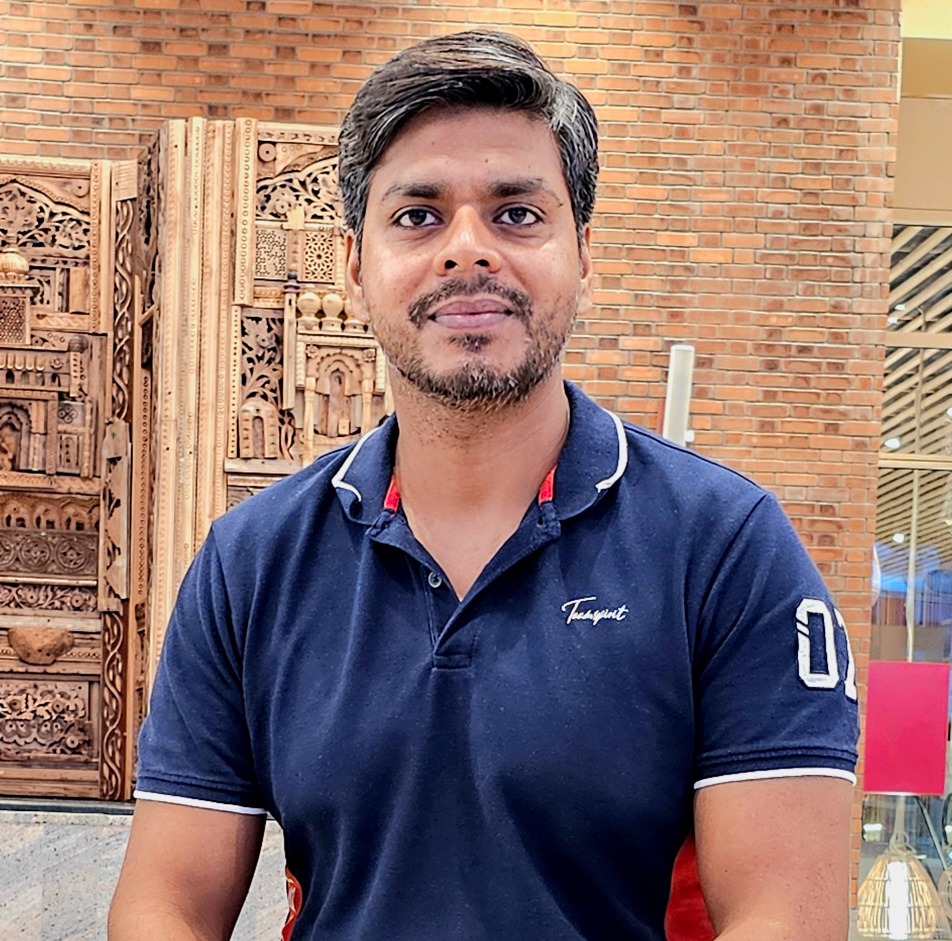
Here is know your instructor "I spent 18 years building computer networks at Cisco. But honestly, I am more curious than technical. I read. I listen to podcasts. I follow finance, health, and whatever new trend is quietly changing the world before most people notice. That curiosity is why I teach the way I do. I never start with "how." I always start with "why." Because if you understand why something exists, the how becomes easy. Right now, that curiosity brought me here. To help people understand what AI is really doing to jobs and careers. Before it is too late."
View ProfileWhat exactly is this Network Interview Preparation Series?
It is a 13 hour interview focused series that covers fifteen of the most asked networking topics in interviews. Each topic is taught with whiteboarding and analogies so you can reproduce the answer on paper, not just recite it.
How is this different from a regular CCNA course?
A CCNA course teaches the syllabus. This series teaches the answers. You will see how interviewers frame the same topic, what depth they expect, and how to deliver the answer in a structured way that earns marks instead of confusion.
Will I learn configuration in this series?
Some configuration appears in the EVE-NG labs to show protocol behavior, but the focus is interview answers. If you want deeper configuration practice, pair this with Routing Fundamentals and Switching Fundamentals.
Does the series cover both theory and practical questions?
Yes. Lessons on spanning tree, OSPF, traceroute, and TCP all combine theory with live behavior in EVE-NG. Design and troubleshooting lessons are whiteboard driven, since that is how interviewers ask them.
Is the content updated with current interview trends?
Yes. The topics chosen are the questions that have remained constant across years of interviews because they test reasoning rather than the latest feature.
Do I need any prior networking background?
No. The series is built absolutely from scratch. Every topic opens with the problem statement before any protocol detail.
I am a college student. Can I take this?
Yes. Many learners take this in their final year to walk into placement interviews ready. If you want a wider foundation, add the CCNA for Know Nothing Learner course alongside.
I am working in L1 support. Will this help me move to a network engineer role?
Yes. The series targets exactly the gap that L1 candidates face in lateral interviews — being able to explain the why and to design on a whiteboard.
Why is the course taught in both Hindi and English?
Because interviews are conducted in both. Many learners think more clearly in Hindi but must answer in English. Having both versions lets you prepare in the language that suits your brain and rehearse in the language that suits your interview.
Are the Hindi and English versions identical in content?
The topics are identical. The voice is different. The Hindi version uses Hinglish so technical terms stay in English while the explanation flows naturally.
Can I switch between Hindi and English while watching?
Yes. Many learners watch a topic in Hindi to understand, then watch the same topic in English to rehearse the words they will use in the interview.
Does this series prepare me for CCNA certification?
It is not a CCNA course, but every topic here overlaps with CCNA. If you are aiming at CCNA exam plus the interview, pair this series with CCNA for Know Nothing Learner.
Will I get a certificate after finishing this course?
Yes. A completion certificate by BridgeWhy is issued. The bigger reward is being able to walk into the interview room and own the whiteboard.
What kind of companies ask these questions?
Service providers, enterprises, MNCs, system integrators, and cloud companies. The topics chosen are the ones that appear repeatedly across all of them because they test thinking, not memory.
Is this useful for senior or lateral interviews too?
Yes. The why first approach is what senior interviewers look for. A senior candidate who can still draw a clean small office design and explain OSI versus TCP/IP without notes stands out immediately.
Are there mock interview questions inside the lessons?
Each lesson is shaped like an interview answer. You hear the question, you see the structured response, and you watch the whiteboard explanation. After a few topics you will start anticipating the next interviewer question.
What if my interviewer asks a topic that is not in this series?
The series teaches a reasoning style. Once you have practiced fifteen topics this way, you can build a similar answer for almost any networking question that is asked.
Why is EVE-NG used?
Because it shows protocol behavior on real virtual devices. Spanning tree blocking a port or OSPF forming an adjacency is more memorable when you see it happen than when you read about it.
Do I need to install EVE-NG myself?
You can follow along without your own lab, since the lessons show the labs live. If you want to practice the same topology, EVE-NG is free for community use and can run on a laptop with enough memory.
What access plans are available?
You can choose 3 Month Access , 1 Year Access, or Lifetime Access.
Can I watch on mobile?
Yes. The platform works on phone, tablet, and desktop browsers.
Who teaches this course?
Vishnu Dutt, with 19 plus years at Cisco Systems and 15000 plus learners trained across 100 plus countries. Read more on the About Us page.
What should I take after this interview series?
The recommended path is Switching Fundamentals, Routing Fundamentals, OSPF, BGP, and then VXLAN with BGP-EVPN. For deeper transport knowledge, add TCP From Scratch and MPLS from Scratch.
Where can I see the full BridgeWhy catalog?
The full course list is available on the BridgeWhy store.