Contact us

OSPF Training from Scratch | 20 Hours | OSPF Protocol with Labs in Hindi and English | BridgeWhy

  • Learn OSPF absolutely from scratch.

Created by

  • English and Hindi

About the Course

Master OSPF from Absolute Scratch: One Course, Both Languages
If you are preparing for CCNA, CCNP or any networking interview, one protocol comes up in almost every conversation: OSPF. Open Shortest Path First is the routing protocol that runs inside most enterprise networks, every data center, and every service provider edge. If you understand OSPF deeply, you can answer most routing questions in any interview, and you can handle most routing problems in any project.

This package gives you the complete OSPF course in both Hindi and English. One purchase. One price. Two languages. Learn in the language you think in.
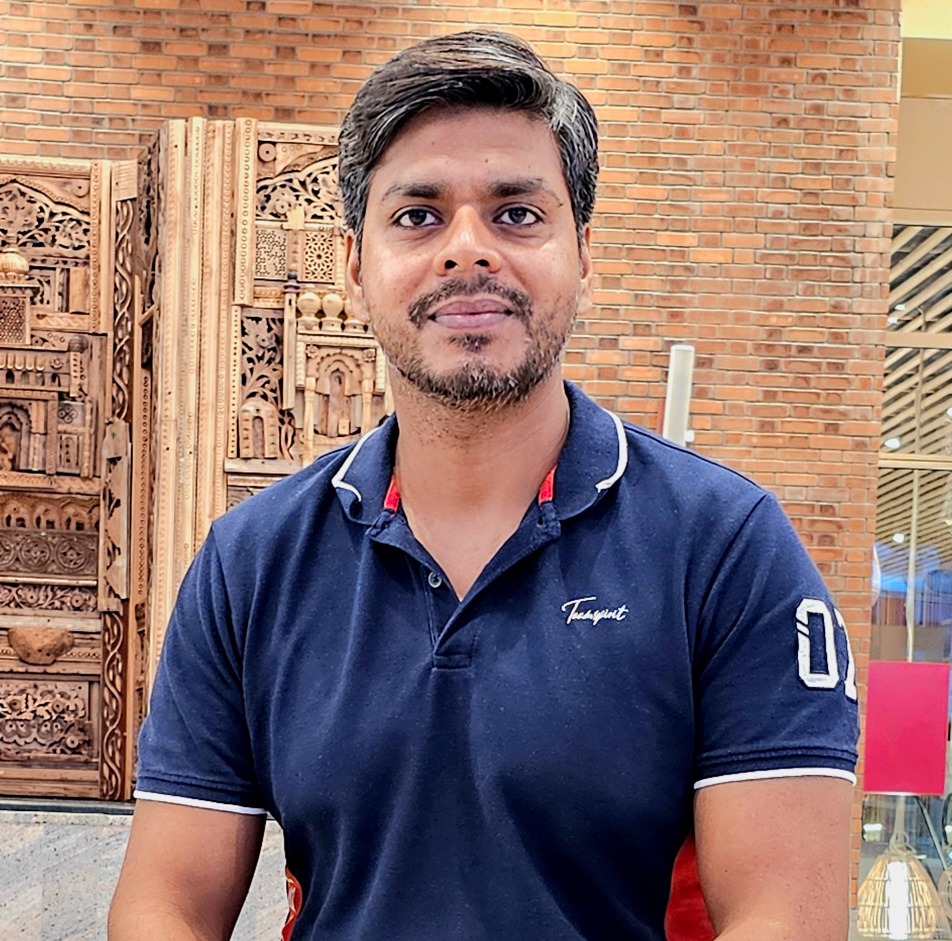
The course is taught by Vishnu Dutt, a network architect with more than 19 years of experience at Cisco, trusted by more than 15000 learners in over 100 countries.

Why this course is different:
Most OSPF tutorials teach you commands. They show you how to configure OSPF on a router and they stop there. The moment an interviewer asks "why does OSPF need areas" or "why does OSPF elect a DR," those tutorials cannot help you.

This course is built on the WHY behind every concept. We do not start with commands. We start with the problem. Why was OSPF created? What problem does it solve that distance vector protocols could not solve? Why does OSPF need a link state database? Why does the SPF algorithm work the way it works? Once you understand the why, the configurations and the commands take ten minutes.

What is inside this package:
You get the complete OSPF curriculum in both Hindi and English versions. Every lesson, every lab, every diagram, in both languages. Choose your language version or switch between them for revision. Many learners watch the Hindi version first and then watch the English version to revise, because hearing the same concept in two languages cements the understanding.

You will learn link state fundamentals, OSPF neighborship and adjacency states, the concept of areas and why OSPF needs them, DR and BDR election, every LSA type from Type 1 to Type 7, the OSPF LSDB, the SPF algorithm in plain language, OSPF cost and traffic engineering, stub and totally stubby areas, virtual links, partitioned areas, default route handling and a full hands on lab in EVE-NG.

Who this course is for:
This course is for the CCNA student who wants to truly understand routing, not just memorize. It is for the CCNP and CCIE candidate who wants to score well and also handle the work after the certificate. It is for the working network engineer who configures OSPF every week but never had time to learn the why. It is for the job seeker who wants to walk into an interview with confidence. And it is for the project engineer who is about to design or troubleshoot a multi area OSPF network.

If you understand basic static routing, you can take this course. If you have never touched a router, take the free Routing Fundamentals course first and come back.

What this course will do for your career:

After this course you will be able to draw an OSPF topology on a whiteboard and explain every packet that flows across it. You will be able to design a multi area OSPF network from a blank page. You will be able to walk into any interview and answer any OSPF question. And you will look at production OSPF networks and immediately see why they were designed the way they were.

OSPF is also the foundation for many advanced technologies. Inside MPLS, OSPF runs in the core. Inside SD-Access, OSPF runs in the underlay. Inside data center fabrics, OSPF or its cousin IS-IS carries the underlay routes. Master OSPF now, and every advanced course on this site becomes ten times easier.

Where this course fits in your networking journey:

If you are starting fresh, the right path looks like this.

1. Begin with CCNA course if you only understand English and Be-Job-Ready course if you only understand Hindi.
2. Then take Routing Fundamentals course to understand how routing actually works.
3. Then take Switching Fundamentals course to build your understanding on switching.
4. Then take this OSPF and TCP Course.
5. After this, move to BGP and MPLS through course.
6. Then go modern with SD-WAN, SD-Access and VXLAN-EVPN course.
7. Add automation through our Network Automation Course.
8. Prepare for your job change with the Network Interview Preparation course.
9. Get every course in one go through our 1 Year or Lifetime Access plan.
10. All the course are available here in Store


Why learners trust BridgeWhy:
More than 15000 network engineers have learned with us across more than 100 countries. Our teaching philosophy is one sentence: if you understand the mind of the person who built the concept, the concept becomes easy. Every course on BridgeWhy is built on this why first approach.

Read more about our approach on our About Us

Start your OSPF journey today. Pick the language that feels natural. Watch starting two video lessons absolutely free. See the depth. Then decide.

What you will Learn 

This course takes you from "OSPF is some routing protocol" to "I can design and troubleshoot any OSPF network."

Here is what you will learn, lesson by lesson:

Lesson 1: OSPF as a Link State Routing Protocol Why does OSPF exist when we already had RIP? What is a link state protocol and how is it different from distance vector? Why do link state protocols converge faster and avoid routing loops? We start from the problem, not the solution.

Lesson 2: OSPF Neighborship and Concept of Area Part 1 Before two OSPF routers exchange any route, they must become neighbors. Why? What is the handshake? And why does OSPF group routers into areas instead of letting every router know every other router? We answer the why first, then the how.

Lesson 3: OSPF Neighborship and Concept of Area Part 2 We go deeper into areas: backbone area, regular areas, area border routers and autonomous system boundary routers. You will understand the full hierarchical design of OSPF.

Lesson 4: OSPF Lab in EVE-NG Now we move from theory to practice. We build a full OSPF lab in EVE-NG step by step. You watch every command, every output, every packet. By the end, you can build your own lab on your own laptop.

Lesson 5: Concept of DR and BDR and their Election Why does OSPF need a Designated Router on broadcast networks? What problem does the DR solve? How is the election done, what is the role of the BDR, and what happens when the DR fails? Every interview asks this. Every engineer should know this.

Lesson 6: OSPF Adjacencies and various states Down, Init, 2 way, Exstart, Exchange, Loading, Full. Seven states that every OSPF neighborship passes through. We walk through each state, what happens in it, and why each state is needed. This is one of the most frequently asked interview topics.

Lesson 7: LSA Sequence Number and Aging How does OSPF know which Link State Advertisement is the latest? What is the sequence number? What is the age field? Why must old LSAs eventually expire? You will understand the full LSA lifecycle.

Lesson 8: OSPF LSDB and Understanding Type 1 and Type 2 LSAs The Link State Database is the brain of OSPF. We open the LSDB and explain every entry. Type 1 Router LSA and Type 2 Network LSA are the foundation. Once you understand these, the rest of the LSA types become easy.

Lesson 9: OSPF Stub and Point to Point Networks Different network types behave differently in OSPF. Why does OSPF treat a serial link differently from an Ethernet link? Why does a stub network not need a DR? This lesson clears up confusion that most engineers carry for years.

Lesson 10: OSPF Loop Avoidance and SPF Algorithm This is the heart of OSPF. Dijkstra's Shortest Path First algorithm, explained in plain language, with simple drawings, with no scary math. You will finally understand how OSPF actually picks a route, and why it never produces loops inside an area.

Lesson 11: OSPF Cost and Traffic Engineering Why does OSPF cost depend on bandwidth? How do you change cost to influence path selection? When should you use traffic engineering inside OSPF? Real world techniques that interviewers love.

Lesson 12: Here we will learn OSPF redistribution and Type-4 and Type-5 LSA in detail.

Lesson 13: We will learn OSPF Stubby Areas, Partitioned Area and Virtual Link Stub area. This will include totally stubby area, NSSA, totally stubby NSSA. Why do all these area types exist?

Lesson 14: What is a partitioned area and why is it a problem? What is a virtual link and when must you use it? We solve the confusion that almost every CCNP candidate faces here.

Lesson 15: In this lesson we will learn about route summarization and priority in OSPF.

Lesson 16: OSPF Default Route and Lab How does OSPF advertise a default route? What is the difference between default information originate with and without always? We finish with a hands on lab to lock in everything you learned. By the end of these lessons, OSPF will not feel like a protocol you memorized. It will feel like a protocol you understand. That is the difference between passing an exam and being good at your job.

Curriculum


Class-1: OSPF (A link state routing protocol)
Preview
Class-2: OSPF neighborship and concept of Area
Preview
Class-3: OSPF neighborship and concept of Area
Class-4: Create your own OSPF lab on EVE-NG
Class-5: DR/BDR election and Concept of LSA
Class-6: OSPF Adjacencies and various states
Class-7: LSA Sequence number and Aging
Class-8: OSPF LSDB, Type-1 and Type-2 LSA
Class-9: OSPF stub and point-to-point networks
Class-10: OSPF loop avoidance and SPF algorithm
Class-11: OSPF Cost and Traffic Engineering
Class-12: OSPF Redistribution, Type-4 and Type-5 LSA
Class-13: OSPF Stubby Areas
Class-14: Partitioned area and Virtual Link
Class-15: Route Summarization and Route Priority in OSPF
Class-16: OSPF Default Route and LAB

Know your instructor


Frequently asked Questions


What will I learn in this OSPF course?

You will learn OSPF from absolute scratch. We start with what a link state routing protocol is and why OSPF was created. Then we cover neighborship, adjacency states, the concept of areas, DR and BDR election, every LSA type, the LSDB, the SPF algorithm, OSPF cost, traffic engineering, stub and totally stubby areas, virtual links, partitioned areas, default route handling and hands on labs in EVE-NG.

Is this course based on Cisco devices?

Yes, the labs and configurations are shown on Cisco devices, but the concepts are vendor neutral. OSPF works the same way on Juniper, Arista, Nokia, Huawei or any other vendor. The protocol is an open standard.

Do you cover OSPFv3 for IPv6?

The main focus is OSPFv2 for IPv4, which is what every exam and most production networks use. For OSPFv3 and IPv6 specific topics, we have a dedicated course where IPv6 routing is covered.

I am a complete beginner. Can I take this course?

You need basic networking knowledge: IP addressing, subnetting and what a router does. If you do not have that yet, take our free Routing Fundamentals course. After that, you are fully ready for this OSPF course.

Do I need to know any programming?

No. OSPF is pure networking. No coding required.

How is OSPF different from BGP?

OSPF is an interior gateway protocol used inside a single organization. BGP is an exterior gateway protocol used between organizations. Once you finish OSPF here, you can take our OSPF-BGP-MPLS from Scratch package to learn BGP and MPLS on top of your OSPF foundation.

Is this course available in Hindi?

Yes. This package includes the full course in both Hindi and English at one price. You choose the language you learn in.

Should I take Routing Fundamentals before OSPF?

It helps. Routing Fundamentals course explains how routing actually works at a base level: how a router decides where to send a packet, what a routing table contains, and how different protocols compete. With that base, OSPF becomes much easier.

Are the Hindi and English versions the same content?

Yes. Same lessons, same depth, same labs. Only the language is different.

Will this course help me pass CCNA?

Yes. The OSPF topics in CCNA are covered completely, and the course explains the WHY behind each topic, which is exactly what the new CCNA blueprint tests.

Will this course help me pass CCNP?

Yes. The course goes well beyond CCNA depth and covers CCNP level OSPF topics including all area types, virtual links, LSA types and traffic engineering.

Is this course good for CCIE preparation?

This course gives you a strong CCIE foundation for OSPF. For CCIE, you will also need extensive lab practice and edge case troubleshooting, but the conceptual foundation here is solid CCIE quality.

How will this course help in interviews?

OSPF is asked in almost every networking interview. Common questions include OSPF adjacency states, DR and BDR election, area types, LSA types, virtual links and the SPF algorithm. Every one of these is covered in detail in this course. We also have a dedicated Interview Preparation Series course that you can pair with this course.

Is OSPF still relevant in 2026 with SD-WAN and SD-Access?

Absolutely yes. SD-WAN often runs OSPF on the LAN side. SD-Access uses IS-IS in the underlay, which is conceptually identical to OSPF. Data center fabrics use OSPF or IS-IS in the underlay. Service provider cores use OSPF. OSPF is more relevant than ever because it sits underneath the modern technologies.

Are there hands on labs?

Yes. The course includes a full OSPF lab in EVE-NG and a default route lab, plus configuration walkthroughs throughout. You can follow along on your own laptop.

What is EVE-NG and do I need to pay for it?

EVE-NG is a free network emulator that runs Cisco and other vendor images on your laptop. You can use the free Community edition. We show you how to set it up.

Can I switch between Hindi and English versions?

Yes. Many learners watch one version first, then watch the other for revision. Hearing the same concept in two languages cements the understanding deeply.

What if I do not have a powerful laptop?

You can also use Cisco Packet Tracer (free from Cisco) or GNS3 (free) for most OSPF labs. Or you can simply watch the labs and absorb the configuration logic without running them yourself, although practising is always better.

How long do I get access?

Access depends on the plan you pick. Individual purchase gives you the duration shown on the page. The 1 Year Access plan gives one year, and the Lifetime plan gives seven years.

Can I watch on mobile?

Yes. The course works on mobile, tablet, laptop and desktop.

Will I get a certificate?

Yes. You get a certificate of completion after finishing the course.

Is there a refund policy?

Please read our refund policy for the latest details before you buy.

Who teaches this course?

Vishnu Dutt teaches this course. He is a network architect with more than 19 years of experience at Cisco, trusted by more than 15000 learners in over 100 countries. Read more on our About Us page.

How do I contact you if I have a question before buying?

You can WhatsApp or call us at +91 86185 35205, or email support@bridgewhy.com. You can also visit our Contact Us page.

What should I learn after OSPF?

After OSPF, the natural next step is BGP and MPLS through our OSPF BGP MPLS from Scratch package. After that, you can go modern with SD-WAN from Scratch, add data center skills with VXLAN with BGP-EVPN, or learn automation with Network Automation from Scratch. For the full path, see our 1 Year Access plan which includes every course.

Enroll Now