Contact us

IS-IS Training from Scratch in English | 8.5 Hours | Link State Protocol with EVE-NG Labs | BridgeWhy

Created by Vishnu Dutt

  • English

About the course

If you have been searching for a clear English language course on IS-IS, 

you have probably noticed that most content online treats the protocol as an afterthought to OSPF. This course does not do that. This is the English only version of IS-IS from Scratch on BridgeWhy, built as a full curriculum with 8.5 hours of lessons across 6 chapters, taught with the why first method, and paired with EVE-NG and Wireshark labs. It is the curriculum door for learners who prefer to study in English and want the syllabus laid out lesson by lesson before they enrol.


The reason for a separate English page is simple. 

Learners who search for "IS-IS training in English" or "IS-IS course English" want to see exactly what is inside the course, in English, without having to filter through Hindi material. This page is built to answer those questions directly. If you would prefer both Hindi and English at one bundled price, the IS-IS from Scratch Package is the recommended purchase because it costs less than buying both language versions separately and gives you the freedom to pick either explanation on any topic.


Every lesson is structured around one central idea: 

you cannot troubleshoot what you do not understand. A router picks a route because a designer decided it should. If you want to be the engineer who fixes real problems in real networks, you have to understand the mind of the designer. That is the reason each lesson opens with a whiteboard, an analogy and the why, and only then moves to configuration in EVE-NG. By Lesson 6 you will not just be running commands. You will be predicting what those commands will produce before you press Enter.


This English course is a strong fit for learners preparing for CCNP ENARSI, 

CCIE Enterprise Infrastructure, and CCIE Service Provider tracks, and for practising engineers who work in ISP, telecom or hyperscale data center environments. It also pairs cleanly with OSPF from Scratch  BGP from Scratch and MPLS from Scratch, which together form a complete service provider foundation.


If you are still at the beginning of your networking journey, start with Routing Fundamentals, Switching Fundamentals and CCNA first. For interview readiness on top of IS-IS, add Interview Preparation Series. If you want to try the teaching style before buying, SD-Access is a free course on the platform.

One more note on why this course lists every lesson in full detail on this page. Search engines rank pages that answer the actual question a searcher typed. When someone types "IS-IS TLV explained" or "IS-IS DIS election broadcast," they want to find a page that clearly covers that specific topic. The lesson descriptions below use plain language, real technical terms, and cover every important sub topic taught in the course. Read them fully before buying. If a topic you needed is not in this list, no salesy About paragraph will make up for it. This transparency is the reason learners across 100+ countries continue to enrol in BridgeWhy courses.

What you will learn


Lesson 1: Why Behind IS-IS Routing Protocol
IS-IS did not appear out of nowhere. It was designed in the late 1980s for the OSI protocol suite, specifically for routing CLNS (Connectionless Network Service) traffic. When IP became the standard, IS-IS was extended through Integrated IS-IS to route both CLNS and IP together. Because it runs directly on Layer 2 (using its own Ethertype), it is not tied to any specific network layer protocol. That is the design decision that allowed the same protocol to carry IPv4, then IPv6, then Segment Routing labels, and next whatever the future brings, without a protocol rewrite. In this lesson you will trace this history, understand the DECnet Phase V background, and see why big service providers who deployed IS-IS in the 1990s never had a reason to move away. You will also compare IS-IS to OSPF at a high level so that everything that follows makes intuitive sense.

 Lesson 2: TLVs, NSAP and Link State philosophy
This is the lesson where IS-IS starts to feel logical instead of mysterious. Link state philosophy is explained first: every router advertises the state of its own links, every router receives every other router's advertisement, and every router therefore knows the complete topology. Then TLV encoding is dissected. TLV stands for Type Length Value, and the reason IS-IS uses TLVs everywhere is that they let the protocol carry any new kind of information (IPv6 reachability, MPLS labels, Segment Routing SIDs) simply by defining a new TLV type. You will study the most important TLVs by hand: IS Neighbours, IP Interface Address, IP Internal Reachability, and Extended IS Reachability. Then NSAP addressing is broken down piece by piece so that Area ID, System ID and NSEL stop being a scary string and become an address you can read at a glance.

Lesson 3: IS-IS Adjacency, LSP and Area
Adjacency is not automatic. In this lesson you will follow the exact sequence: a router sends an IIH (IS-IS Hello) PDU on its interface, receives an IIH from the neighbour, checks parameters like MTU, system ID uniqueness, level and area, moves through the Down, Init and Up states, and finally exchanges LSPs (Link State PDUs). LSPs are the IS-IS equivalent of OSPF LSAs, but they are handled quite differently, and you will see exactly how. Then areas are explained: in IS-IS a router lives inside one area only, and the boundary between areas sits on the link, not on the router. This is very different from OSPF. Understanding this design choice is the reason IS-IS networks can grow larger with less operational pain than OSPF networks of the same size.

Lesson 4: Flooding and Levels in IS-IS
Once a router has an LSP, it must share it with every other router in the level. Naive flooding creates loops and wastes bandwidth. IS-IS solves this with two special PDU types: CSNP (Complete Sequence Number PDU), which is a summary of all LSPs a router has, and PSNP (Partial Sequence Number PDU), which acknowledges or requests specific LSPs. You will see, packet by packet, how a stable IS-IS network keeps its link state database consistent using CSNPs on point to point and broadcast links. Then you will learn the two level hierarchy: Level 1 routes stay inside an area, Level 2 routes cross areas, and Level 1-2 routers act as the connection point. You will see why this design lets IS-IS scale to networks with hundreds or thousands of nodes without collapsing under flooding overhead.

Lesson 5: Lab Configuration and Broadcast Network and Traffic Path
This is the hands on lesson. You will build a multi router IS-IS lab in EVE-NG using Cisco IOL or CSR images. You will assign NET (Network Entity Title) addresses, enable IS-IS on interfaces, set levels, and confirm adjacencies coming up. You will then break things on purpose to see the failure modes: mismatched MTU, mismatched area on a Level 1 adjacency, mismatched authentication. On a broadcast segment you will observe the DIS (Designated Intermediate System) election, and you will understand why IS-IS uses a single DIS with pseudonode representation instead of the DR and BDR combination that OSPF uses. Finally you will trace the actual traffic path and predict which link the router will pick before running any show command. Wireshark captures at every step make the theory visible on the wire.

Lesson 6: Metrics, Redistribution and Dijkstra Algorithm
Dijkstra is the shortest path algorithm that every link state protocol depends on, and IS-IS is no exception. In this closing lesson you will step through Dijkstra by hand on a small topology so that you can predict SPF results before the router computes them. You will then learn the difference between narrow metrics (originally 6 bits, capped at 63 per link) and wide metrics (24 bits, up to 16 million per link), and you will understand exactly why every serious IS-IS deployment today runs the wide metric style. Redistribution between IS-IS and other protocols (OSPF, BGP, static) is covered with a focus on avoiding routing loops through route tagging and careful policy. By the end you will be able to design a small IS-IS network, predict every best path, and defend every decision on a whiteboard.

Course Curriculum

Know your instructor


Instructor Image
Instructor

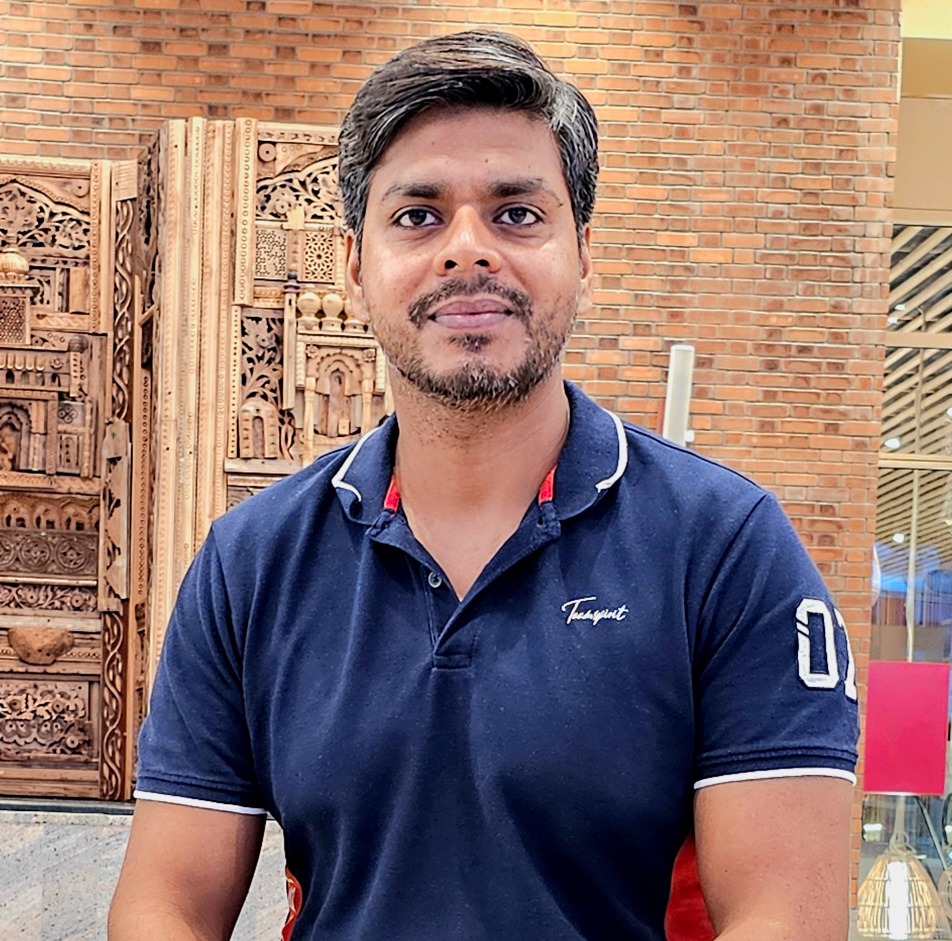
Vishnu Dutt

Network Instructor

Here is know your instructor "I spent 18 years building computer networks at Cisco. But honestly, I am more curious than technical. I read. I listen to podcasts. I follow finance, health, and whatever new trend is quietly changing the world before most people notice. That curiosity is why I teach the way I do. I never start with "how." I always start with "why." Because if you understand why something exists, the how becomes easy. Right now, that curiosity brought me here. To help people understand what AI is really doing to jobs and careers. Before it is too late."

View Profile

Frequently asked Questions


What is the exact syllabus of this English only course?

Six lessons across 8.5 hours: why behind IS-IS, TLVs and NSAP with link state philosophy, adjacency and LSP and area, flooding and levels, lab configuration with broadcast networks and traffic path, and finally metrics with redistribution and Dijkstra. Every lesson is listed in full above.


Is IS-IS covered in enough depth for CCIE Service Provider?

Yes. The course goes deep enough to answer scenario style questions on adjacency, DIS election, wide metrics, redistribution and Level 1 to Level 2 leaking, all of which appear in CCIE Service Provider blueprints.

What is the difference between this English page and the Package page?

This page is English only. The Package bundles the same course in both Hindi and English at a discounted combined price. If you want flexibility between languages, choose the Package.

Do I need OSPF knowledge before starting?

It is helpful but not required. If you know OSPF, several IS-IS concepts will feel familiar and you will move faster. If you do not, take OSPF from Scratch  alongside this course or read up on the basics of link state routing.

Will Wireshark captures be provided?

Yes. You will see live Wireshark captures inside the lesson videos, and you will be guided on how to reproduce every capture in your own EVE-NG lab.

Are commands shown for Cisco IOS only, or also for other vendors?

The lab is Cisco based because Cisco IOS syntax is the most widely used starting point. The protocol concepts are vendor neutral, and the same design skills will apply to Juniper, Nokia and Arista implementations of IS-IS.

What version of EVE-NG do I need?

The community edition of EVE-NG is enough for this course. Any version that supports Cisco IOL or CSR images will work.

Is redistribution really needed if I only plan to run IS-IS?

Yes. Almost every real network runs multiple protocols. Even if you deploy IS-IS in the core, you will need to redistribute static routes, aggregate BGP routes, or interoperate with OSPF at the edge. Redistribution mistakes are the source of most real world routing incidents, and Lesson 6 gives you the safe patterns.

Does the course cover IPv6 IS-IS (multi topology)?

Multi topology IS-IS for IPv6 is discussed within the TLV and address family lesson. Deep IPv6 deployment is not the primary focus of this course.

How is the why first method different from other courses I have seen?

Most courses jump to commands and hope you will pick up the reasoning later. Why first means the reasoning comes before the command, so the command feels obvious rather than memorised. It is the same method Vishnu has used to teach 15000+ learners across 100+ countries.

Will I get a completion certificate?

Yes. A BridgeWhy completion certificate is issued when you finish the course.

How long do I get access to this course?

Access length depends on the plan: 3 Months Access , 1 Year Access or Lifetime Access . Choose based on your pace.

Which courses should I take after IS-IS?

For service provider work, BGP from Scratch followed by MPLS from Scratch . For enterprise topics, SD-WAN from Scratch and VXLAN with BGP-EVPN are strong follow ups.

Can I get interview help based on IS-IS?

Yes. Add Interview Preparation Series  to sharpen your interview answers, especially for service provider roles where IS-IS questions are common.

Who teaches this course?

Vishnu Dutt. 19+ years at Cisco, 15000+ learners across 100+ countries. Read more on the About Us page.

Where can I browse other BridgeWhy courses?

Visit the BridgeWhy store to see the full catalog and pick a learning path that matches your goals.

Enroll Now